|


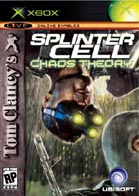
SPLINTER CELL: CHAOS THEORY
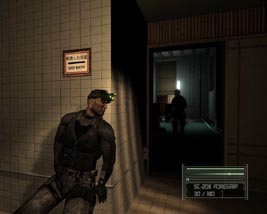
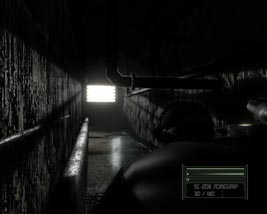
Sam Fisher returns in this highly anticipated third installment in Tom Clancy’s Splinter Cell series only a year after the second (Pandora Tomorrow) hit the market. While Pandora Tomorrow was developed by Ubisoft’s Shanghai studio, the Montreal studio took an extra year to start from scratch and develop Splinter Cell: Chaos Theory, which is sure to be a contender for game of the year in 2005. Without
a doubt, the most noticeable change this time around is in
the visuals, given that the old graphics engine used in the
previous two games was overhauled and reworked completely.
But what’s most impressive is that the general “look”
and “feel” of the game has hardly been touched.
Sam still looks and moves the same, but the environments around
him are better. The light and shadows are breathtaking, and
mission locales are varied and interesting in many ways. Colours
are richer, reflective light is more eye-catching and the
textures used are some of the best ever seen in a video game. The AI has also seen a marked improvement, with a few exceptions here and there. Enemies will make your job tougher by using flashlights and working together to investigate any unusual instances, which would probably explain why Sam’s non-lethal weapon inventory has been downsized because it would probably make things a lot easier. But there are times when the AI helps, as I noticed on a few occasions when an enemy should’ve seen or heard me, but stayed motionless. Also, instead of shooting out lights all the time, you can now cause them to flicker out for about 30 seconds with an electronic jammer attached to your pistol. This helps enemies be less suspicious because of the lack of broken glass. The
single-player campaign takes place in 2007, and revolves around
a crisis in the Korean Peninsula. The events unfold through
excellent cutscenes and debriefings and take Sam to places
like a Spanish colonial fort in Peru, an upscale penthouse
suite in Manhattan and a war-torn urban landscape in Seoul.
Where levels were linear in the previous two games, Chaos
Theory’s levels are more distinct and offer a variety
of methods to complete each one. This alone changes the replay
value of the single-player campaign. You also have a choice in equipping yourself for each mission. You can go stealth, assault or a mix of the two. The assault option lets you use a sniper and shotgun attachment for your assault rifle. Both are quite loud, so don’t expect stealth to be your strong suit if you’re going to use them. And for those annoying alarms from the first two games, triggering three of them won’t result in mission failure this time. Sam will hear an earful from his boss, Lambert, for doing so, but alarms are also easier to trigger now, which means enemies will be ready and waiting for him. Sam also carries a knife with him for the first time, and its usefulness is obvious early on. Sam can now be seen holding the knife to an enemy’s neck during interrogation, but he can also slice someone sleeping on a bed or shank someone from behind. The knife can also be used to cut through material for a sneakier way to set up an ambush or to grab someone through it. And if that’s not enough, he can even break a lock on a door by shoving it into a keyhole. As for movement, the coolest new move has to be the neckbreaker while hanging from a pipe. Sam can now reach down and either snap an enemy’s neck or knock him out. Every time I see it, it never gets old, and has to be one of the coolest things any character can do in a video game. Plus, if Sam’s hanging from a ledge, he can pull an enemy over the edge from his feet. The multiplayer game online was a big hit in Pandora Tomorrow, but it’s been expanded here to allow for two-player missions, where you and a friend can work together in four co-op levels via offline split-screen, System Link or Xbox Live. There is a lot of fun to be had here, and you can expect downloadable co-op missions to come out in the next few months. The mercenaries vs. spies game online is also smoother this time around, and features a few enhancements for both sides. Spies can now render themselves invisible by using a camouflage suit, while mercenaries can utilize a devastating rifle whip technique that can knock down any spies within reach. For fans of the SC series, Chaos Theory is
the hallmark, but newcomers should feel comfortable with it
as well. With such an engaging single-player mode, and incredibly
entertaining multiplayer gameplay, as well as sporting some
of the best graphics ever seen in a console game, Chaos Theory
is currently the game to beat for top spot in 2005. |
Publisher: Rating: 10/10
|

Follow Faze on Twitter @FazeMagazine